What Is a Boutonniere Deformity (and What Can You Do About It)?
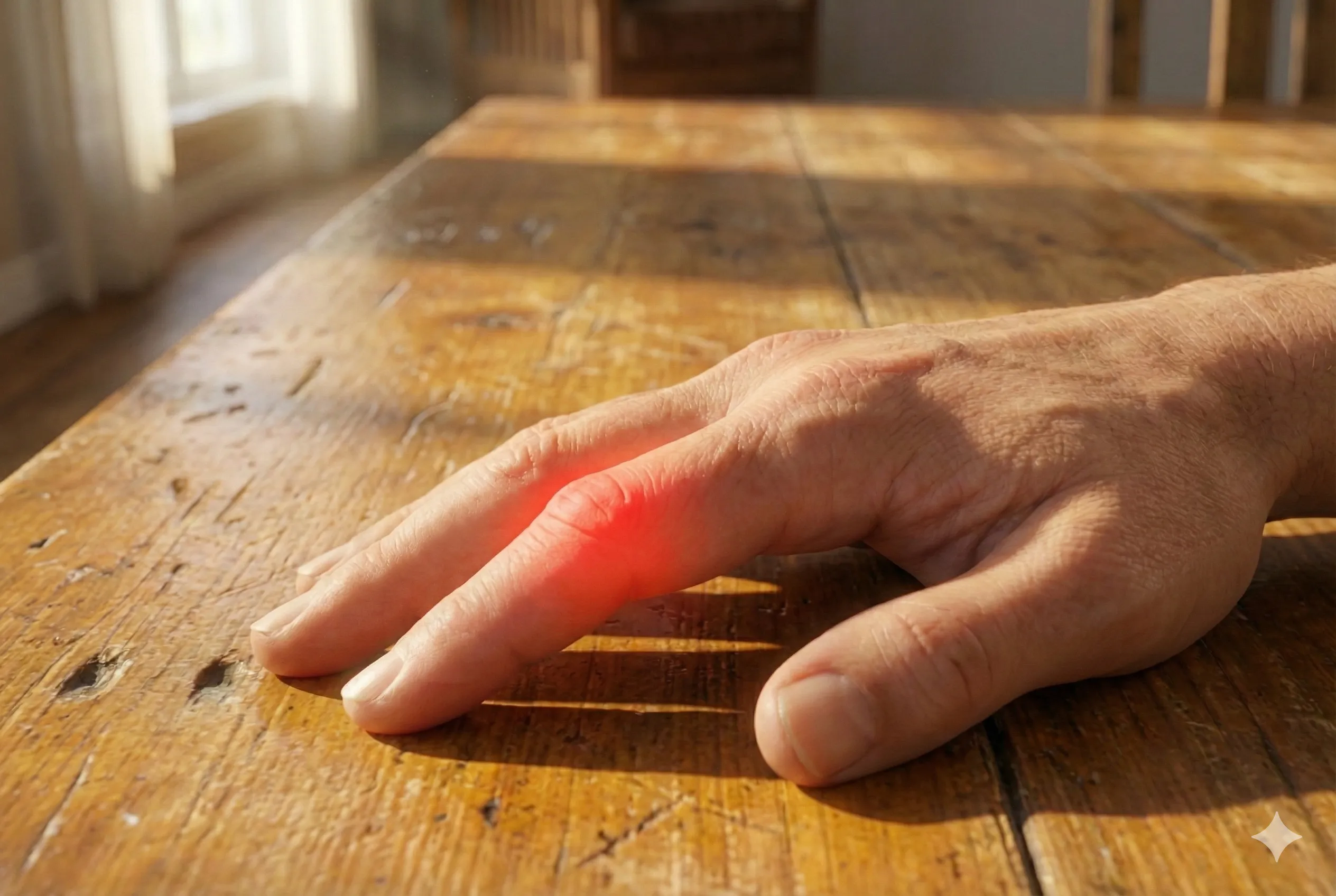
If you're having trouble bending your finger, making a fist, or gripping objects, you might be dealing with a Boutonniere deformity—a condition that can seriously affect your hand function but is treatable with the right care.
Let’s walk through what it is, what causes it, and what you can do to recover.
Definition: What Is a Boutonniere Deformity?
A Boutonniere deformity is a specific pattern of finger joint misalignment:
Extension at the metacarpophalangeal joint (MCP – the big knuckle)
Flexion at the proximal interphalangeal joint (PIP – the middle finger joint)
Hyperextension at the distal interphalangeal joint (DIP – the tip of the finger)


👉 In plain English:
Your middle finger joint points downward, and your finger tip sticks up and won’t bend. This makes gripping objects or forming a fist extremely difficult.
What Causes It?
The condition usually results from a rupture of the extensor hood, the connective tissue that anchors the tendons responsible for straightening your fingers.
Common causes:
Trauma, like jamming a finger during sports or a fall
Rheumatoid arthritis, which can degrade joint structures over time
Non-Surgical Treatment
If caught early, non-surgical treatment is often effective. A physician may recommend:
Splinting to help realign the finger while the tissue heals
Understanding the Severity of Achilles Tendonitis
Bracing for Boutonniere Deformity
1. Standing Straight-Leg Calf Stretch
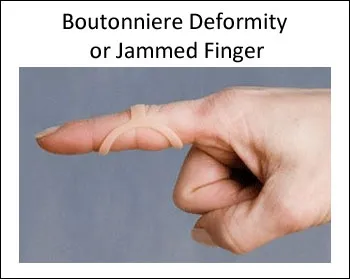
The Oval-8® finger brace is commonly prescribed.
Available in skin-tone plastic or stylish silver ring-like designs
Easily purchased on Amazon for around $10
Comes in a variety of sizes to fit any finger
Wear Schedule: Typically worn 24/7 for 6–8 weeks, unless instructed otherwise.
💡 Make sure the center of the brace is positioned over the middle (PIP) joint.
Physical Therapy for Recovery
Therapy is usually prescribed 2–3 times per week for 6–8 weeks, depending on the injury’s severity and your progress.
Here are some of the most common exercises:

1. Tendon Gliding Exercises
These gentle movements prevent stiffness and keep the finger tendons moving smoothly.
Instructions:
Move your hand through a sequence of positions (A to B, B to C, etc.)
Focus on smooth, pain-free motion
3 sets of 10 reps per position
“No pain, no gain” doesn’t apply to modern rehab!
2. General Stretching

Wrist Extension Stretch
Keep your elbow straight
Grasp your opposite hand and gently bend the wrist forward
Keep your fingers extended
Hold for 30 seconds. Repeat 2–3 times.
3. Self Tendon Blocking Exercises
These are advanced movements that build strength and improve neuromuscular control.
Start these 2–3 weeks after your injury, unless advised otherwise.
Do: 3 sets of 10 reps, once daily.
A. MCP Blocking Exercise

Strengthens lumbricals and palmar interossei
Palm up, support forearm
Flex only the knuckle joint (MCP), keeping other joints straight
B. PIP Blocking Exercise
Strengthens flexor digitorum superficialis
Palm up, support forearm
Use the opposite hand to block the middle joint (PIP)
Slowly flex the finger
C. DIP Blocking Exercise
Strengthens flexor digitorum profundus
Palm up, support forearm
Use the opposite hand to block the tip joint (DIP)
Slowly flex the fingertip while keeping the rest straight
Need Help?
Your therapist may also provide other personalized exercises tailored to your progress. If any of these feel painful or hard to perform, please don’t push through—we’re here to help you feel better through movement.
📧 Email us and reach out anytime if you need guidance or support in your recovery.