The Biggest Myth About Pain & Exercise (Especially for Low Back Pain)

One of the most common myths I hear from patients is this:
❌ “If something causes pain, I should never do that activity again.”
Let’s bust that myth right now.
Pain is not your enemy—it’s your body’s signal that something is off. It often means there’s an imbalance or weakness that needs to be addressed—not that you should stop moving altogether.
Understanding Pain During Injury
Yes, in the early stages of an injury, you’ll want to reduce intensity and temporarily modify exercises to allow the inflammation and healing to begin.
But completely avoiding movement? That’s where many people go wrong
🔁 Movement is medicine—as long as it's gradual and controlled.
This is especially true for low back pain. Recovery is a journey, not a quick fix. And that journey involves rebuilding strength and retraining movement patterns.
When Can I Start Loading My Back Again?
A great question I often get:
“When do I know it's okay to increase the load or intensity again?”
Here's a general guide:
If there's pain with an exercise, your body may not be ready.
Break the movement down into simpler components until it can be done without pain.
The initial healing phase typically lasts 1–2 weeks, depending on the severity and assuming there was no surgery.
Start with low-load, foundational movements and gradually build up over time.
Why Loading Is Essential
If you avoid the activity that originally caused your pain, you may never re-train your body to handle that movement again. This creates a cycle of re-injury and fear.
I’m not saying you should push through pain.
I am saying:
✅ Never stop moving entirely.
✅ Never stop exercising.
Your Body Loves Movement
Let’s say it louder for the people in the back:
“The body loves to move. Keeping it moving is the best medicine you can give your body.”
A Few Simple Exercises for Low Back Recovery
These movements are functional, foundational, and mirror everyday activities. They’ll help you start reloading your back safely and progressively.
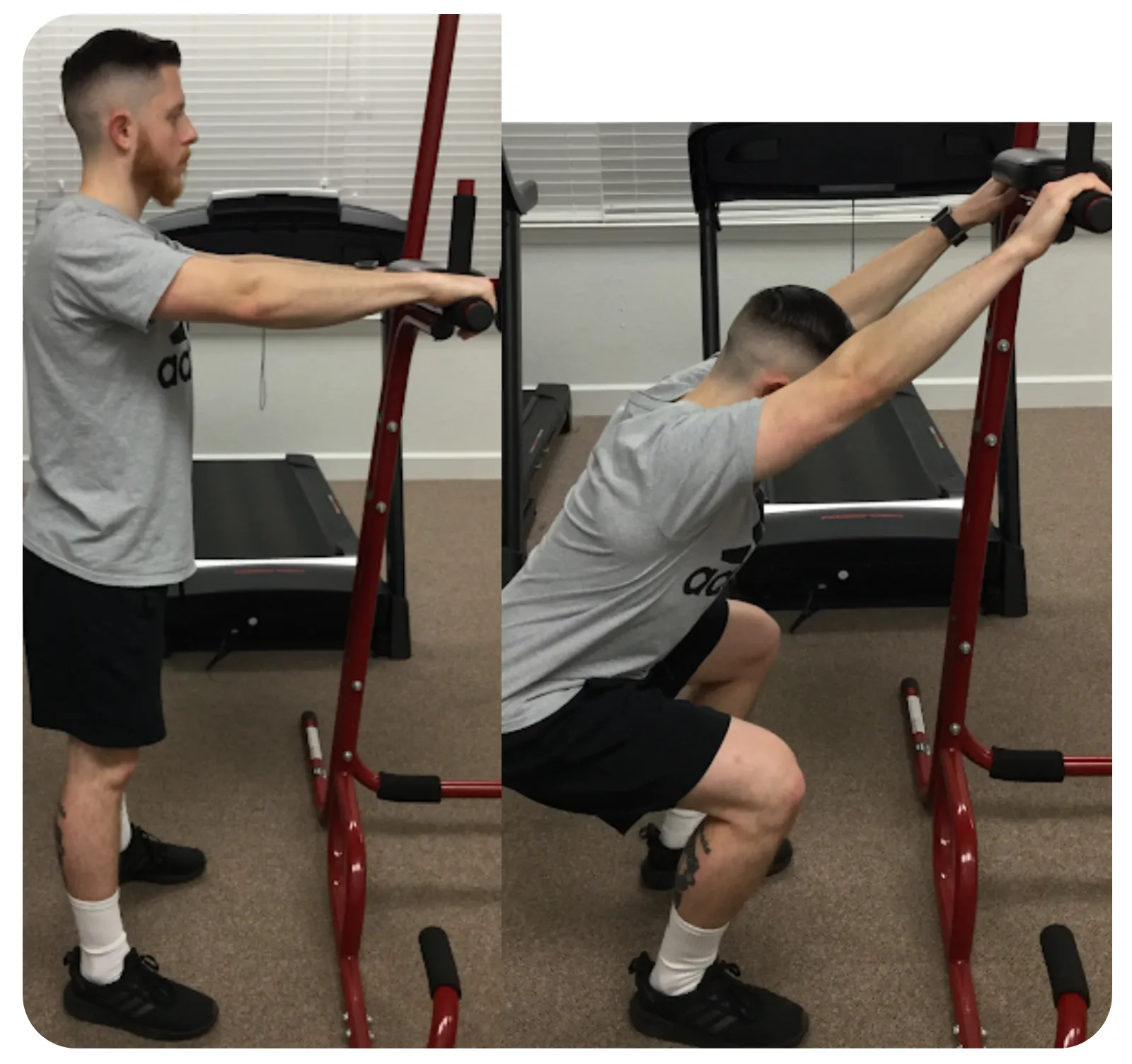
1. Supported Squats
Goal: Reintroduce the squat pattern without stressing the back.
Hold onto a barbell at shoulder height for support.
Slowly squat down only to the point before pain.
Use your arms to assist, and over time, allow your back and legs to do more of the work.

2. Deadlifts
Deadlifts mimic one of the most essential movement patterns we perform every day.
Place a kettlebell between your ankles.
Stand shoulder-width apart.
Bend at the hips (not your low back) to grab the weight.
Keep your back flat and engage your glutes and core to stand back up.
3. Bridges

Targets the glutes, lumbar muscles, and hamstrings.
Lie on your back, feet shoulder-width apart.
Tuck your pelvis and flatten your back into the floor.
Push through your heels and lift your hips off the ground.
4. Dead Bugs (Abdominal Core Work)

Dead bugs are one of the best exercises to improve core control and reduce low back strain.
Video 1: Flatten your back into the mat and hold for 3 seconds.
🌀 20 reps
Video 2: Flatten your back, raise one arm and opposite leg.
🌀 20 reps each side
Video 3: Raise both arms and extend both legs together.
🌀 20 reps (hardest progression)
Build the Foundation First
These exercises target the core movement patterns you use every day. Once they’re pain-free, you can add accessory movements like:
Lunges
Knee extensions
Hamstring curls
These won’t cure your pain overnight, but they’ll help your body adapt to daily stress and rebuild toward a stronger, pain-free lifestyle.
Need Help?
If any of these movements feel too difficult or painful to perform — don’t guess your way through it. We’re here to help.
📧 Reach out: [email protected]
✨ We’re here to help you feel better through movement.