Why Your Heel Hurts: Understanding Plantar Fasciitis
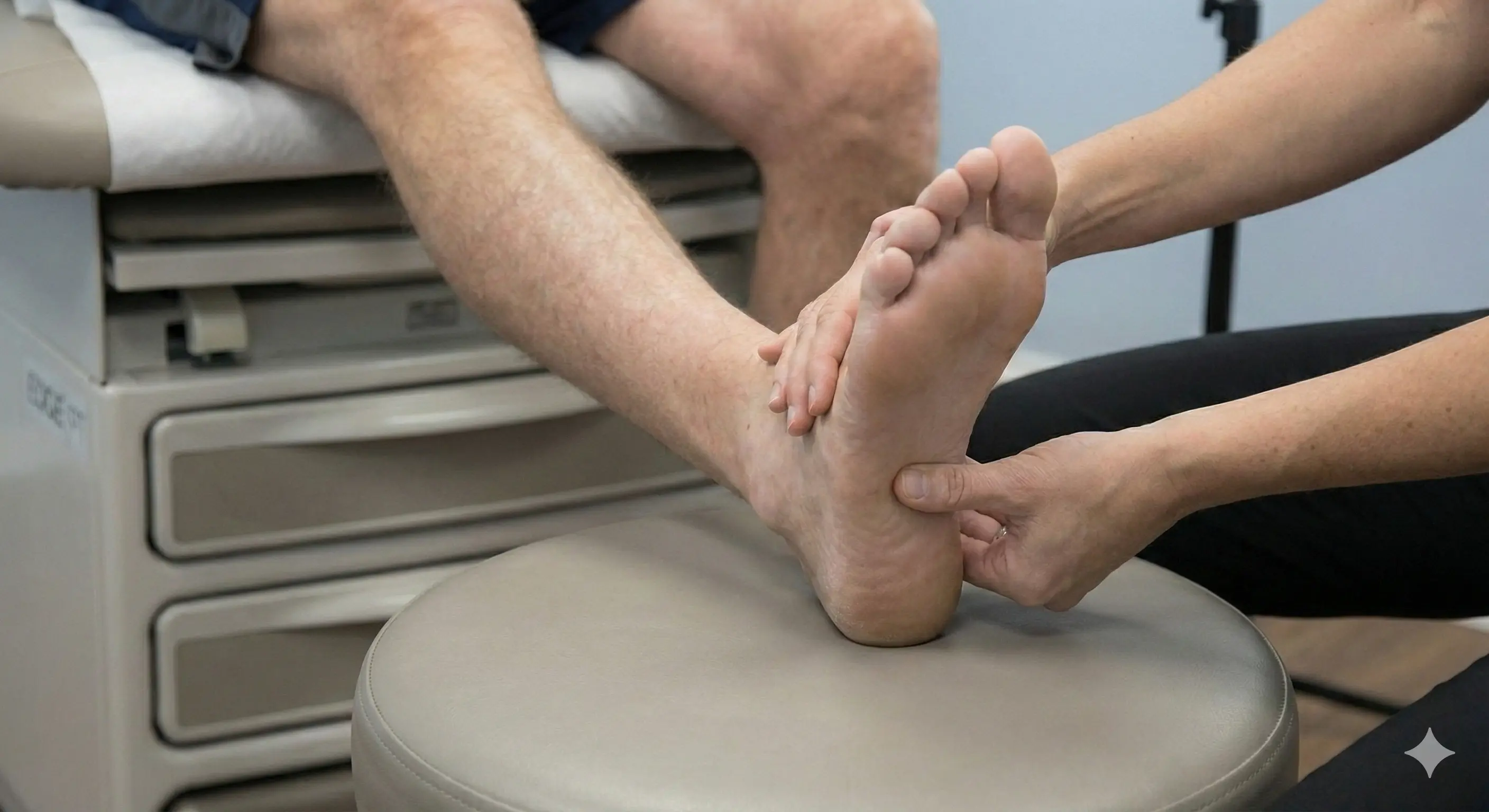
If you’ve ever taken your first step in the morning and felt a sharp, stabbing pain in your heel or the bottom of your foot, you’re not alone. You might be dealing with a condition called Plantar Fasciitis—one of the most common and stubborn foot injuries out there.
What Is Plantar Fasciitis?
Plantar Fasciitis is an inflammatory condition affecting the plantar fascia — the thick band of connective tissue running along the sole of your foot. This band supports your arch and helps absorb shock with every step, jump, or landing.
When the plantar fascia becomes overloaded or overstretched, it leads to microtears and irritation, resulting in pain, stiffness, and inflammation, especially during weight-bearing activities.
Key Symptoms of Plantar Fasciitis
Sharp pain in the heel or sole of the foot — especially with first steps in the morning
Pain after standing or walking for long periods
Discomfort that improves with movement but returns after rest
Tenderness or stiffness near the heel bone or arch
Anatomy Breakdown
The plantar fascia is a thick band that:
Originates from the medial calcaneal tubercle (heel bone)
Splits into three bands (medial, central, lateral)
Supports the foot’s arch and connects to the base of the toes
Blends with the Achilles tendon, heel pad, and intrinsic foot muscles
Why It's Important
The plantar fascia:
Maintains arch stability
Supports your foot during walking and running
Helps absorb and transfer force from heel to toe
5 Exercises to Reduce Plantar Fasciitis Pain
Try these 5 simple movements daily. They help reduce inflammation, stretch the plantar fascia, and strengthen supporting muscles.

1. Towel Stretch (AM Routine)
Sit with your legs extended.
Loop a towel around the ball of your foot.
Gently pull your toes toward you until a stretch is felt in the sole.
✅ Hold for 30 seconds. Repeat 3 times per foot.

2. Plantar Fascia Massage (Ball Roll)
Use a lacrosse ball, tennis ball, or frozen water bottle.
Roll the arch of your foot back and forth with medium pressure.
✅ Do this for 2–3 minutes per foot, especially before standing in the morning.
3. Calf Stretch on Wall

Stand facing a wall. Place one foot behind the other.
Keep back leg straight, front leg bent, heels flat.
Lean forward to feel a stretch in your calf.
✅ Hold 30 seconds. Repeat 3 times per side.
Tight calves can place extra stress on the plantar fascia — this stretch helps reduce that tension.
4. Towel Scrunches

Place a towel flat under your bare foot while seated.
Curl your toes to scrunch the towel toward you.
✅ Perform 2 sets of 10 reps per foot
Strengthens the intrinsic muscles of the foot that support the arch.
5. Eccentric Heel Raises
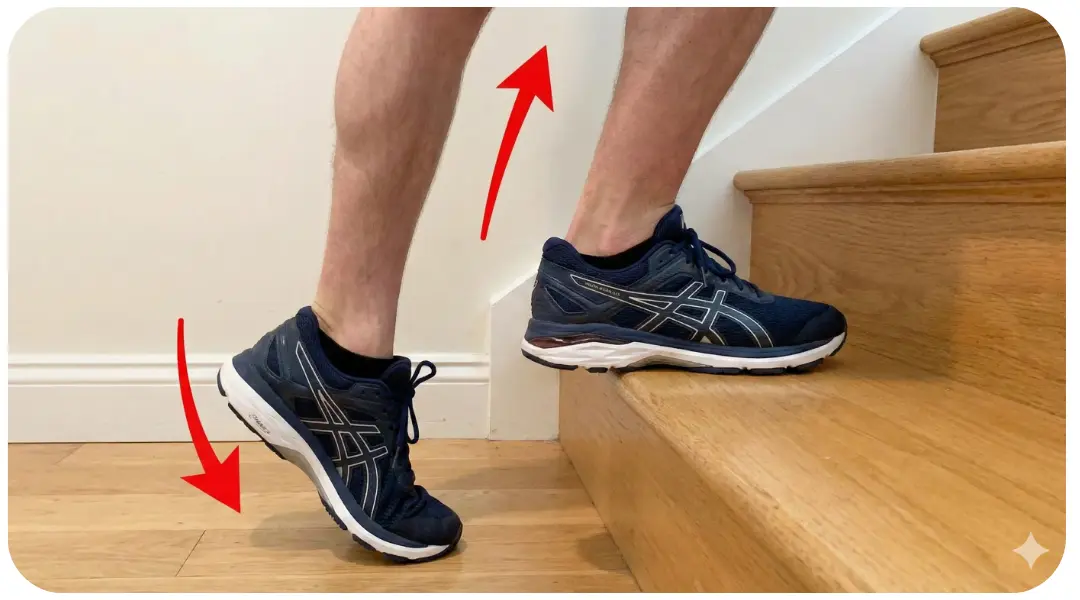
Stand with your heels on a step edge.
Raise both heels, then slowly lower one heel down over 5 seconds.
Use both feet to rise again.
✅ 2 sets of 10 reps on each leg
This strengthens both the calf and plantar fascia, especially helpful in long-term recovery.
Recovery Tip: Consistency Over Intensity
Don’t rush the healing. Plantar Fasciitis responds best to gentle, consistent loading, not aggressive stretching or overuse. Be kind to your feet — they carry you everywhere.
Need Help Now?
If you're dealing with stubborn heel pain and unsure what to do next, we’ve got you.
Email us to speak with a physical therapist or schedule a session.